Why Has Denver Increased in Fentanyl Overdoses?
What’s driving Denver’s spike in fentanyl overdoses, and why does the supply seem stronger than ever? We take you inside the data and the street-level realities: how potency, low production costs, and distribution through a regional transit hub have reshaped the market; why counterfeit pills and polysubstance mixes catch people off guard; and how improved testing revealed the true scale of the problem. From emergency calls to hospital bedsides, you’ll hear how the human impact shows up across families, first responders, and public services.

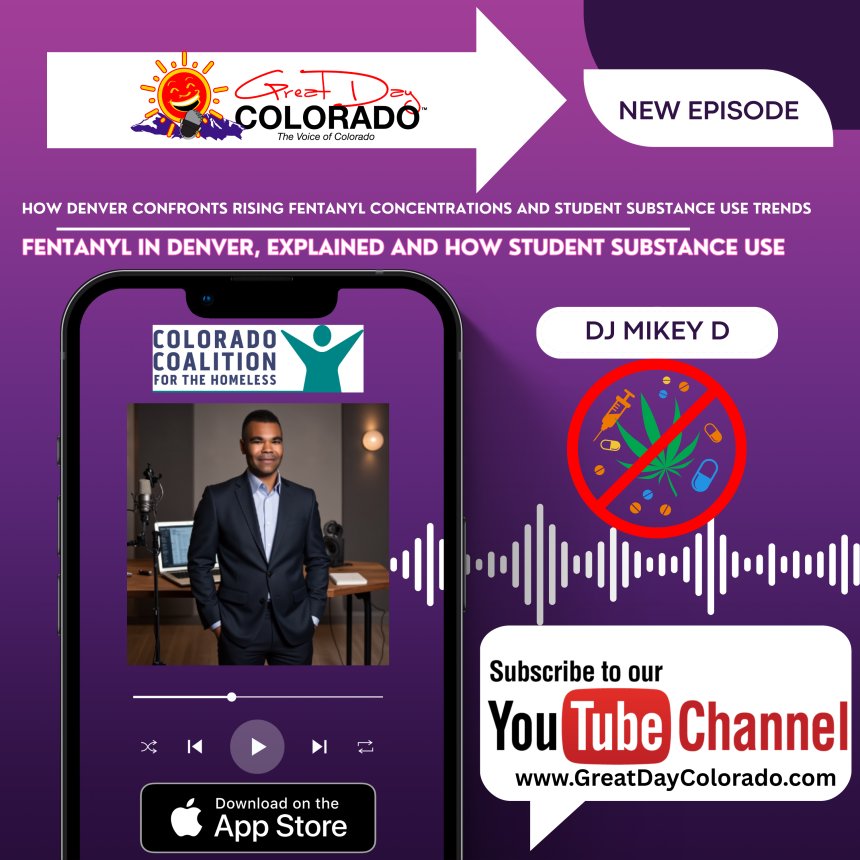
Cheap to make, easy to traffic, deadly in micrograms: fentanyl reshaped Denver’s drug market. We unpack the data, harm reduction, and treatment access—and how students are affected too. Stream the episode and share: what’s the biggest gap to fix next? Denver schools are shifting from punishment to help. Screening, brief interventions, naloxone, and restorative practices are changing outcomes. Curious what works—and what doesn’t? Hit play and weigh in: zero tolerance or support-first? That “zombie” posture at the light isn’t a meme—it's fentanyl. We break down why Denver’s supply got stronger, how Mayor Johnston is responding, and what actually saves lives. Listen now and tell us: what solution should Denver scale first?
Denver’s fentanyl crisis did not emerge overnight, and it isn’t a single-issue story. Across the metro, first responders, hospitals, and public health teams see a rapid rise in overdoses, with fentanyl eclipsing heroin and prescription opioids as the leading driver. The reasons are stark: extreme potency at low cost, easy transport, and high profits pushed traffickers to shift supply, while counterfeit pills and mixed products put unsuspecting users at risk. Denver’s role as a regional transit hub amplifies availability, and improved toxicology has revealed how embedded fentanyl has become in the illicit market. This complex landscape demands clarity on data and a pragmatic plan that centers people, not just policy.
Economic incentives have reshaped the street supply. Fentanyl’s potency means small volumes move large revenues with less risk, making it ideal for illicit networks. Dealers increasingly press it into pills that mimic legitimate medications or blend it into heroin, meth, and cocaine, raising overdose risk for people who do not realize what they’re using. Demand-side shifts also matter: people who lost access to prescribed opioids often turned to street markets where fentanyl has largely replaced heroin. Lowered tolerance after periods of abstinence elevates risk, and the spread of fentanyl into non-opioid drugs blindsides casual users. Surveillance improvements clarify the trend rather than create it, revealing a problem that was already growing.
The human impact shows up in ambulance runs, emergency departments, morgues, and family kitchens. Naloxone saves lives, but it is not a cure; it buys time for treatment and recovery to take root. Harm reduction organizations in Denver now distribute naloxone and fentanyl test strips, while first responders report more on-site reversals. The city’s response, under Mayor Mike Johnston, blends public health and enforcement: expand naloxone, back syringe services, increase access to medications for opioid use disorder such as buprenorphine and methadone, and coordinate across hospitals, EMS, and behavioral health. Alerts warn of counterfeit pills and dangerous batches, and investigations target major suppliers without criminalizing people who use drugs.
Progress is real but uneven. Wider naloxone access, mobile outreach, and low-barrier treatment help, yet stigma, cost, and logistics still block care. Capacity constraints slow scaling, and supply volatility makes every week unpredictable for outreach teams. Experts keep pointing to a multipronged approach: prevention that actually reaches people, harm reduction that meets them where they are, evidence-based treatment and recovery supports, and focused enforcement on organizers rather than end users. This is not a quick fix. It looks like sustained funding, clear metrics, and compassion matched with accountability.
The story doesn’t end on the street; it reaches school hallways. Since marijuana legalization, adolescent access and exposures drew attention, while vaping surged among teens and alcohol remained stubbornly prevalent. Denver-area schools are responding with updated conduct codes and a shift away from zero tolerance toward education, screening, and brief intervention. School-based clinicians and health centers now link students to community services, and staff are trained in naloxone. Prevention messaging highlights the risks of high-THC products and counterfeit pills, while restorative practices replace suspensions to keep students connected to support.
Data is the quiet engine of better responses. Districts track incidents and use anonymous surveys to spot emerging products and shifting patterns. But gaps persist: timely youth treatment is scarce, the vaping market evolves faster than curricula, and many schools lack enough counselors to keep pace. Equity matters, because zip code often predicts access to services. Moving forward means building community treatment capacity, updating prevention with real-time intel, and ensuring every student can reach help quickly. The old model of punishment-first fell short; the emerging model blends clear rules with care, aiming to keep young people safe, engaged in school, and on a path to healthier choices.
If this conversation helped you think differently about fentanyl and youth substance use, subscribe, share with a friend, and leave a review to help others find the show.
From Conflict to Connection
The power of understanding and empathy with "From Conflict to Connection," the transformative guide
Earn Money on Gas and Food
Get Paid for your everyday shopping. Need Gas? Get Paid Need Snacks? Get Paid
The Best Financial Hack Ever!
Discover The Fundamental Principles Of Living Trusts And How To Choose What’s Best For You.
REAL Visitors & SEO Optimization...
Submit Your Website To Over 5,000 Sites Absolutely - FREE!
Battery Buddy Storage
Battery Buddy Storage The Perfect Holiday Gift!
Free eBook on How To Make Money Online
Your Roadmap to Online Income. A step-by-step guide to building your online business using proven tr
Disclaimer: This post contains affiliate links. If you make a purchase, I may receive a commission at no extra cost to you.
Share
What's Your Reaction?
 Like
0
Like
0
 Dislike
0
Dislike
0
 Love
0
Love
0
 Funny
0
Funny
0
 Angry
0
Angry
0
 Sad
0
Sad
0
 Wow
0
Wow
0